 The Holocene Project
3D animals first · then a game and mods
Rebuild the world from the evidence. Then build on it.
We rebuild animals, plants and places from real scans, photographs and measurements, with every source on record. On that base we build three things, in this order:
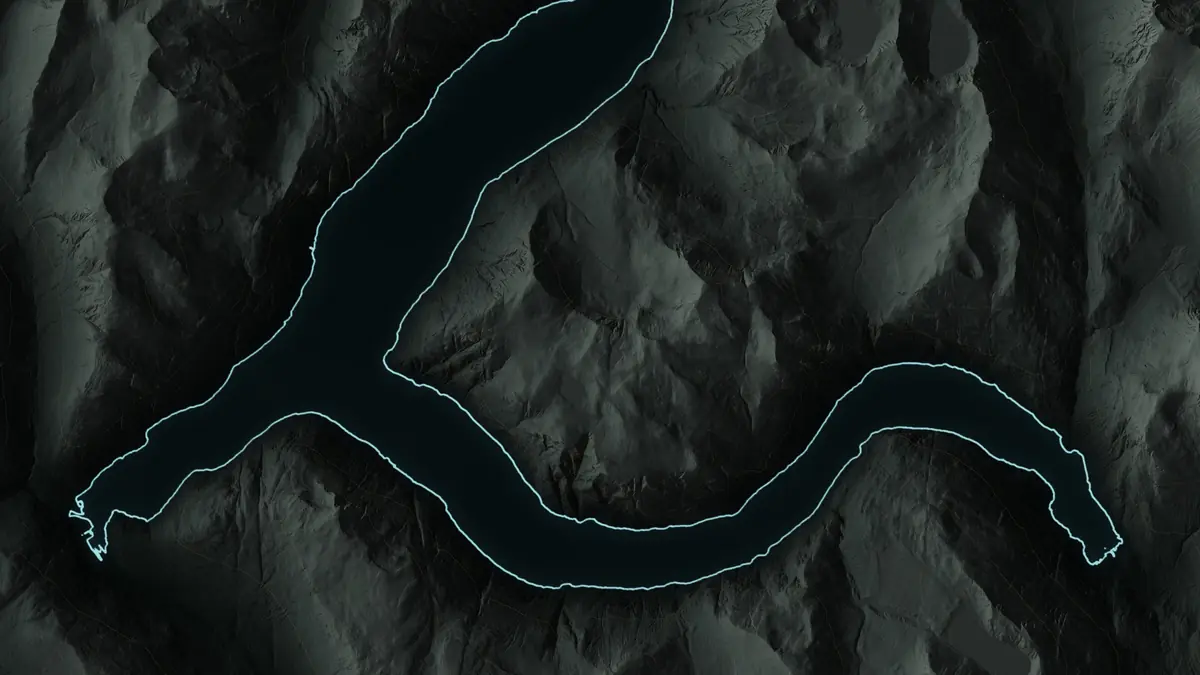
Geirangerfjord, Norway · relief from Kartverket survey heights, 2.5 m grid · CC BY 4.0
- First model
- Vulpes vulpes
- Our fox, recognised
- 75%
- Real fox photos
- 75%
- Sources on record
- 143
- Plant species listed
- 365,813
- Commits
- 1,683
Why it matters
People learn the living world from screens. Screens get it wrong.
Few of us have seen a wild wolf or moose up close, and nobody alive has seen the world before farming. We know them from pictures, games and films, which are mostly made by eye and can't be checked. We think people should be able to see the real thing, and check it.
- 01
Without evidence, the animal is wrong
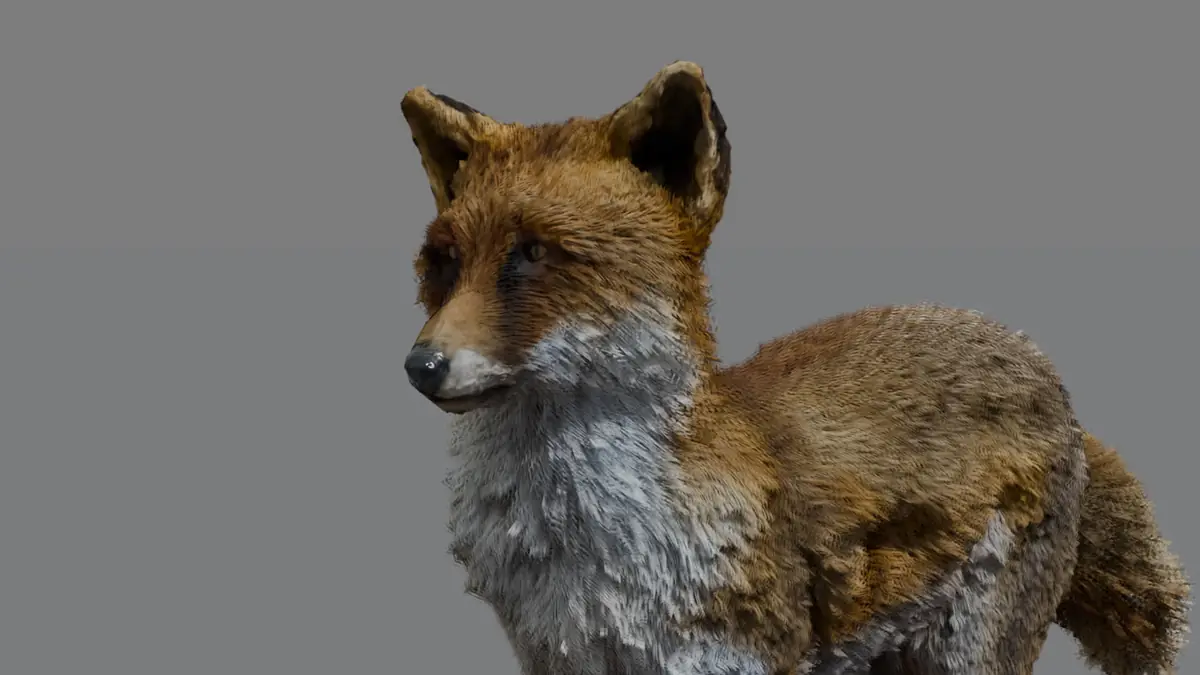
We built a fox from rules and trait tables. A species-recognition model called it a red fox 5.6% of the time. One real scan scored 31.2%, and fur made from that scan lifts it to about 75%. Real photographs score 75.1%. Talent did not close that gap. Evidence did.
- 02
The evidence is locked away
Measurements sit in papers, scans in museum drawers, footage on hard drives. Of the 47,700 animal species in our tables, about one in 300 has an open scan anyone may build a sold model from. There is no open scan of a wolf.
- 03
Some of it can't be gathered again
The great auk, the thylacine and the woolly mammoth survive only as bones, skins and records. Built from those, they can be met again. Living animals can be recorded properly while they are still here.
- 04
Most of the human story has no photographs
Almost all of the 11,700 years since the ice left happened before cameras. Standing in that world, with the animals, plants and weather that were really there, is the only way to see it from inside.
So we are building one cited, checkable copy of the living world, and three things on it that pay for the work: an animal library, a game and a mod market. Every number names its source, and the people who measured these animals get the credit every time. More on why
What we are building
One base of evidence. Three things built on it, library first.
Everything starts as measured data with a source. The same animals, plants and land feed every product, so work done for one makes the others better.
Animal Library
Rigged, animated animals built from scans and measurements, with their sources attached.
For game studios, film and VFX, museums and education.
The library →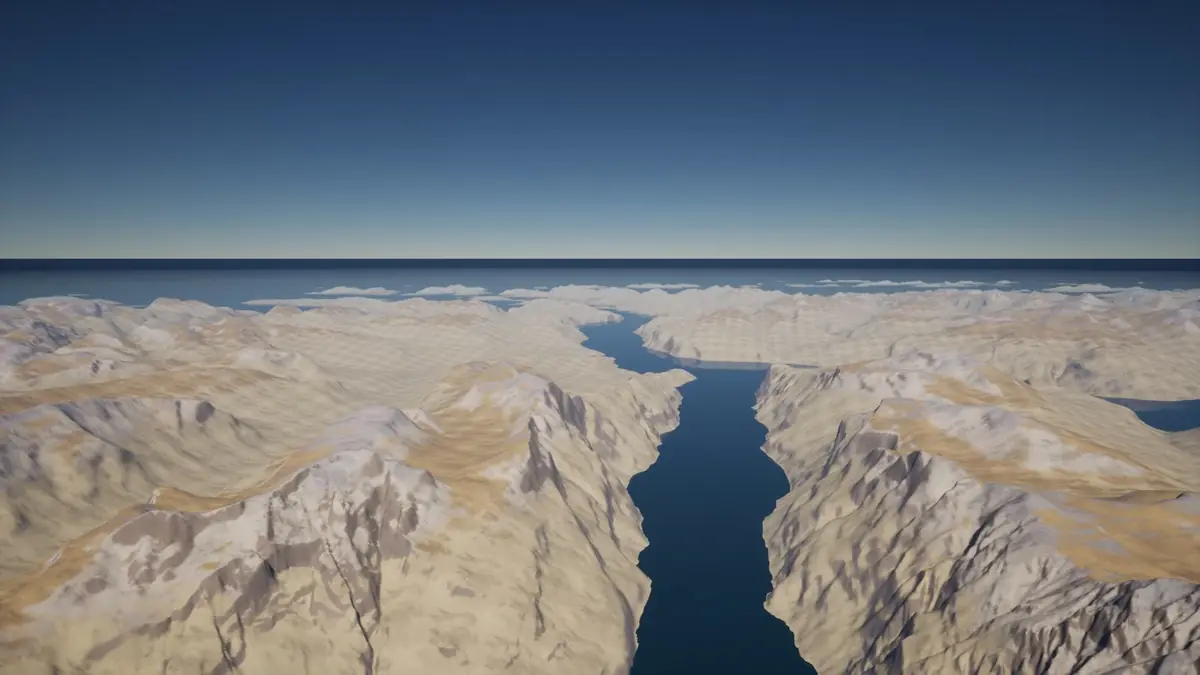
Anywhen, the game
The whole planet, simulated from the end of the Ice Age to today. Grow a camp into a realm, live an ordinary life in any age, or play as an animal.
For players who love history, nature and survival.
The game →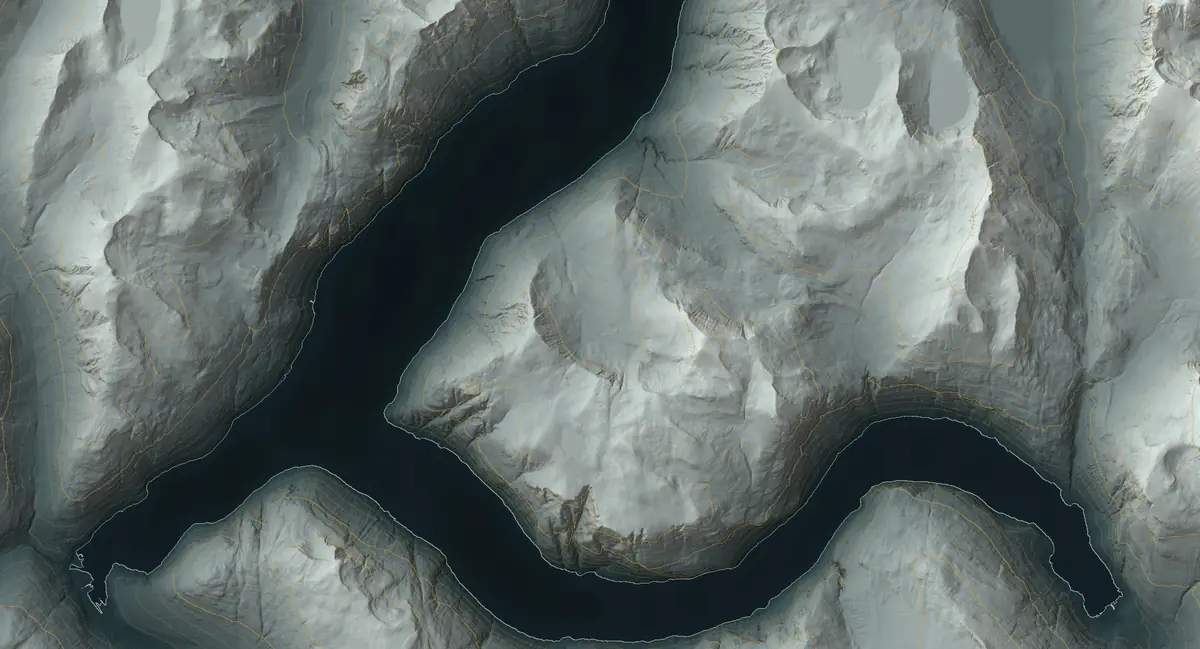
Mod Market
Everything in the game is data. Build a world with its own rules on top of ours, and later sell it.
For modders and creators.
The mod market →An evidence-built world
- ~47,700animal species with a rough draft from open trait data, not yet models
- 365,813plant species from Kew's World Checklist
- 143sources, each with its licence
- 1whole planet: real elevation, climate, rivers and coasts
The first animals
Work with us
Help us get the animals right.
Data partners (museums, zoos, parks and researchers) come first.
- You share
- Scans of mounts, skulls or skeletons. Side-on video of animals moving. Close-ups of feet, faces and mouths. Measurements and keeper notes.
- You get
- Your name on every model built from your data, wherever it goes. Access to the models, any discount and the licence are agreed with each partner. No terms are set yet.
- What one scan did
- One open scan of a mounted fox took our fox from 5.6% to 31.2% on a species-recognition test, and fur made from the same scan took it to about 75%. Real photographs score 75.1%. The test
- Your credit
- Every model carries a credit line like the one our fox carries today:
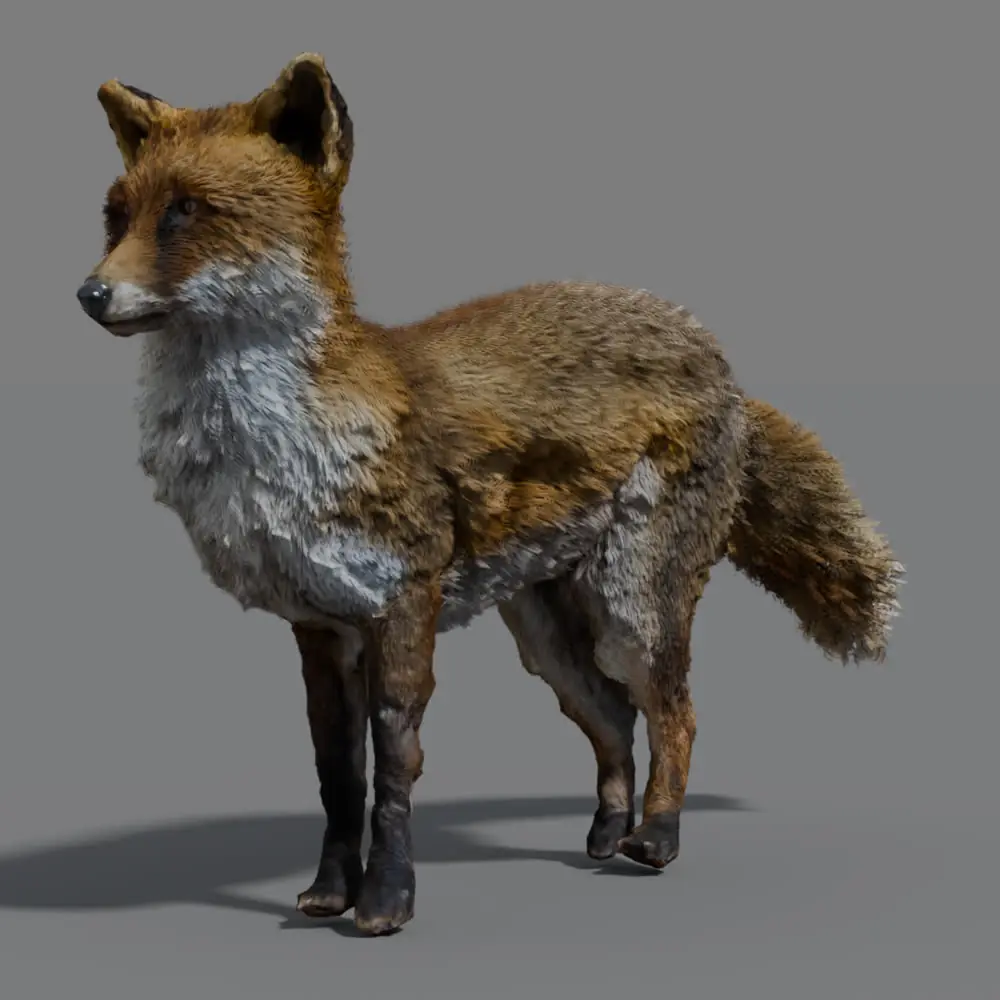
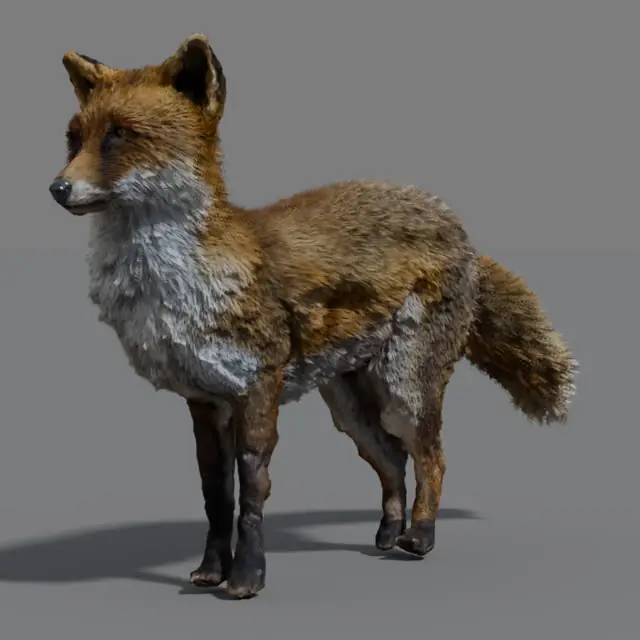
Red fox derived from "test scan of taxidermy fox" by Jakob.Normand, CC BY 4.0, changed by us.
Studios, film-makers and educators: tell us which animals you need, and in what form.
Players and modders: leave your details for early word about the game and the tools.
We never pass your contact details to anyone else.
Red fox, toward sellable
The first animal built from a 3D scan: a CC BY taxidermy scan, rigged, with a coat grown from its own surface and 105 movement clips generated on its measured skeleton. Now fixing legs that poke through the coat in some poses, and the paws.
Common raven, the first bird
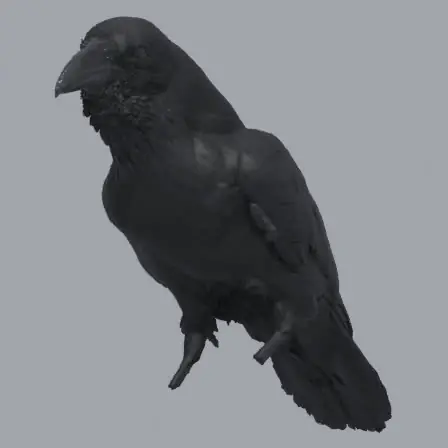
From a CC0 scan. The coat test passed against the bare scan, and it is being brought into Unreal. Flight is being measured from 168 openly licensed raven videos.
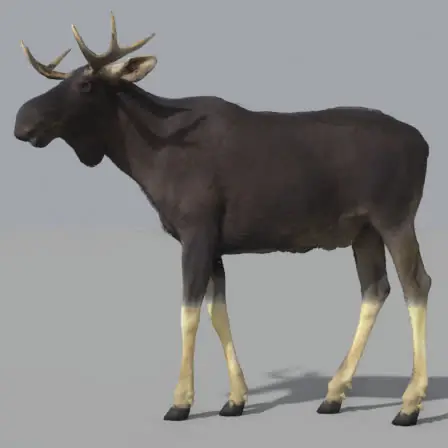
Elk (moose)
Next scan after the fox: a CC BY elk scan, with walk and trot built for deer-family legs.
Grey wolf
Built from measurements and photographs over 18 versions. Held while the scan route is proven on the fox.
How we work
If it is in the world, it has a source.
Every number has a source
Each measurement traces back to a paper, a dataset or a scan, with its licence. The sources page lists them all.
Checked against the real animal
Renders are scored by a species-recognition model, BioCLIP 2, against real photographs before anything counts as done.
No generative AI in the models
Shapes come from scans and measurements, and coats from the scan's own surface. No image or 3D generator makes any part of an animal.